
Discrete, complex or wicked?
Discrete Problems
- A tame problem…
- Well defined, clear solution in sight
- Can be solved in a linear fashion
- Solved using straightforward, reductionist, repeatable, sequential techniques
- Well
Complex Problems
- A difficult to understand problem…
- Non-linear – requires multiple perspectives to solve
- Compounded with multiple interrelated problems
- Solutions may lead to other problems or unintentional outcomes
- New technology, new development environments, new applications
… distinguished a new domain of problem type, as opposed to, say, a new way of solving complex problems. Problem wickedness is not about a higher degree of complexity, it is about a fundamentally different kind of challenge to the design process, one that makes solution secondary and problem understanding central.”
Wicked Problems
- A very hard problem…
- Can overlap with complex problems
- Goals unknown or ambiguous
- Social systems, information systems with intense user involvement
- Often relating to human behaviour
- Ill-structured problem statement
Sources:
http://www.drbrd.com/problems_and_solutions/three_types_of_problems.html
https://aese.psu.edu/research/centers/cecd/engagement-toolbox/problems/complex-or-wicked-issues
What could be discrete, complex and wicked problems in the context of Fremantle?
Discrete – How can we make parking more accessible?
Complex – How can we attract more people to visit Fremantle?
Wicked – How can we reduce the amount of homeless people on the streets of Fremantle?
ASILI DESIGN PROJECTS
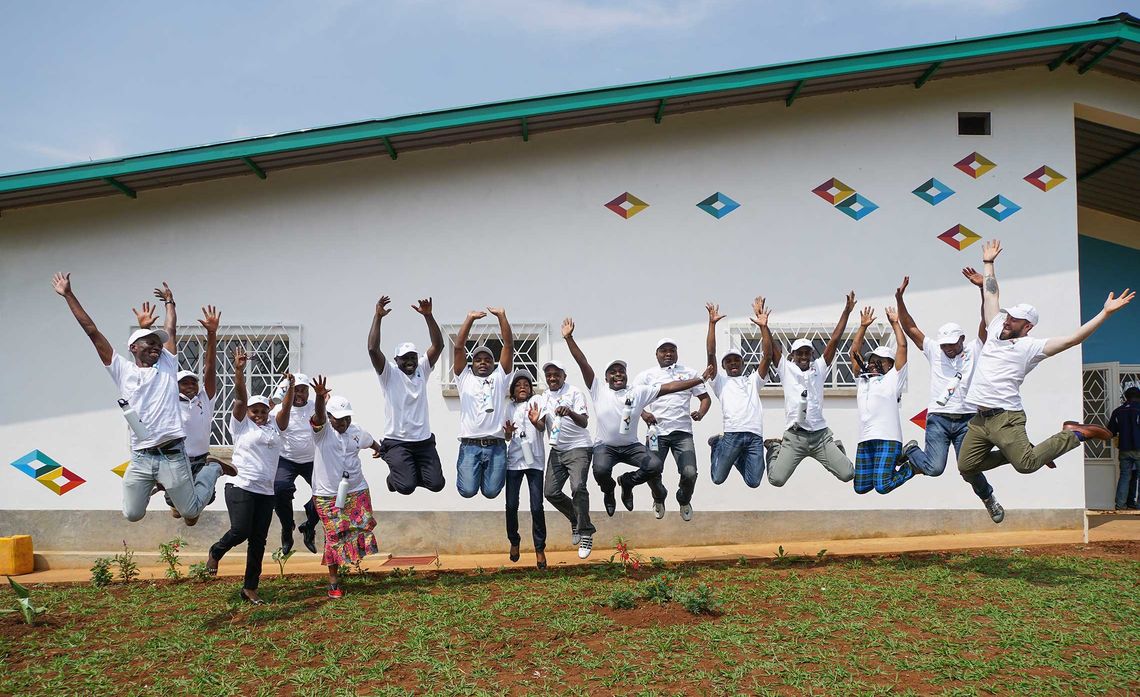
Asili is a project initiated and belonging to design thinking firm IDEO, which tackles the complex social problems of health and infrastructure development in the Kabare region of the Democratic Republic of Congo, a country plagued by poverty and under-developent, struggling with the aftermath of decades of civil war.
As a community-run, sustainable social enterprise (created in partnership with the American Refugee Committee) Asili offers clean water, agricultural services, and a health clinic to the Congolese communities affected by war and poverty.
What was the problem Asili sought to address? Child mortality. Twenty percent of children living in the Democratic Republic of the Congo don’t live to see their fifth birthday. The underlying causes of this high mortality—malnutrition, diarrhea, and malaria—are largely preventable. This is a complex social problem which can’t be solved just by focusing on the symptomology (deaths). By designing a holistic new market-based approach to healthcare, clean water, and agriculture, co-created by the very community that will be using the service, Asili is slowly but successfully improving the overall long-term health of the Kabare community.
Asili takes a human-centered approach to solving the problems of the Congalese, addressing underlying causes and related issues such as communication and trust between the public and their health services.
 Design Practices: Identity